

THE NEUROINFINITI
Stress Response Evaluation
12
MINUTES
7
MEASUREMENTS
3
STRESS CHALLENGES
Chronic stress doesn’t just feel bad — it changes how the nervous system functions. The Stress Response Evaluation (SRE) is a 12-minute, non-invasive test that measures exactly how your brain and body respond to stress, and how well they recover afterward.
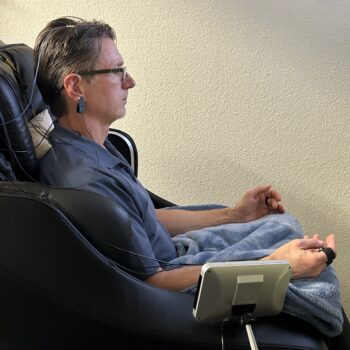
Performed on the NeuroInfiniti — a neurophysiological measurement instrument used in research facilities — the SRE gives Dr. Olsen objective data about your nervous system that no amount of guesswork can provide. No needles. No radiation. Just sensors on the skin, a comfortable chair, and twelve minutes.
Depending on the case, the SRE is often one of the first steps in care at OC Integrative Health — because before deciding what your body needs, it helps to measure what your body is actually doing.
What the SRE Measures
Seven brain and body responses, recorded simultaneously — during stress and during recovery.
- Brainwave patterns (EEG) — alert when challenged, calm when the challenge ends
- Heart rate — what speeds it up, and how quickly it returns to baseline
- Heart rate variability (HRV) — one of the most researched markers of nervous system health
- Respiration rate — breathing rate and pattern under stress
- Skin conductance — a direct, immediate indicator of stress response
- Hand temperature — blood flow drops when the body shifts into a stress state
- Muscle tension (sEMG) — stress held in the trapezius muscles
True health is the body’s ability to respond appropriately to its environment — to engage when challenged, and to recover when the challenge ends.
Learn more or schedule your appointment for
Stress Response Evaluation
Call (949) 859-5192 or Complete the Form
Below and We Will Contact You Shortly
Contact Form
How It Works
Three challenges. Three recoveries. Twelve minutes.
Small sensors are placed on the skin at the shoulders, the top of the head, the ear lobes, and the hands — no needles, no skin penetration. You sit comfortably while the system guides you through three brief challenges: a cognitive challenge, an emotional challenge, and a physical challenge, each followed by a rest period.
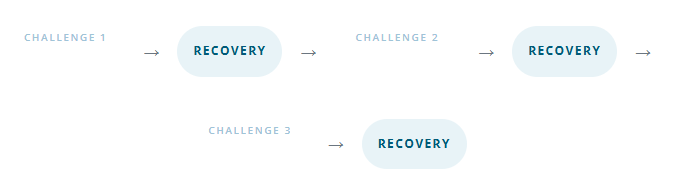
The evaluation isn’t measuring whether you experience stress — everyone does. It’s measuring the pattern that matters: does your nervous system engage appropriately when challenged, and does it recover when the challenge ends? A healthy system does both. A system stuck in stress mode — or unable to engage at all — shows up clearly in the data.
After the test, Dr. Olsen reviews your results in a dedicated report of findings appointment — walking through what your stress response and recovery patterns show, which systems are involved, and what they suggest about the right starting point for care.
Part of the OCIH Approach
Objective measurement for the systems that are hardest to see.
The OCIH Approach evaluates six interacting systems together — what Dr. Olsen calls his Circle of Health. The SRE provides direct, objective measurement of two of those systems: the nervous system and the body’s stress and emotional response patterns.
That matters because these are the systems patients and practitioners most often have to guess about. Labs can measure hormones. Imaging can show structure. The SRE measures something neither can: how your nervous system actually behaves under stress, in real time, in your own physiology.
It also establishes a baseline. As care progresses, the SRE can be re-administered — showing, in your own data, whether your nervous system is regulating and recovering better than it was. Improvement is measured, not just felt.
See the SRE in Action
What the evaluation looks like, and what it reveals.
Dr. Olsen explains the Stress Response Evaluation.
Ready to see how your body actually handles stress?
(949) 859-5192
Frequently Asked Questions
Common questions about the Stress Response Evaluation.
The Stress Response Evaluation (SRE) is a 12-minute, non-invasive, computerized assessment performed on the NeuroInfiniti — a neurophysiological measurement instrument used in research facilities. It measures how your brain and nervous system respond to three types of stress challenges — cognitive, emotional, and physical — and, just as importantly, how quickly and completely they recover afterward. At OC Integrative Health, Dr. Greg Olsen, D.C. uses the SRE to objectively assess nervous system function and guide care.
The SRE measures seven brain and body responses simultaneously: EEG brainwave patterns, heart rate, heart rate variability (HRV), respiration rate, skin conductance, hand temperature, and muscle tension (surface EMG of the trapezius muscles). Together these show whether your nervous system can engage appropriately when challenged and return to a calm, recovered state afterward — the pattern that defines healthy stress adaptation.
Yes. The SRE is completely non-invasive — there are no needles and no skin penetration of any kind. Small sensors are placed on the skin at the shoulders, the top of the head, the ear lobes, and the hands. You sit comfortably for about 12 minutes while the system records your responses to a series of simple challenges and rest periods.
The test itself takes about 12 minutes. At OC Integrative Health, the SRE is followed by a separate report of findings appointment, where Dr. Olsen walks through your results — what your stress response and recovery patterns show, which systems are involved, and what they suggest about the right starting point for care.
The OCIH Approach evaluates six interacting systems together — Dr. Olsen’s Circle of Health. The SRE provides direct, objective measurement of two of those systems: the nervous system and the body’s stress and emotional response patterns. Depending on the case, it is often one of the first steps in care, because it shows where the nervous system is stuck and provides a baseline that later re-testing can be measured against.
The SRE is particularly useful for patients dealing with chronic stress, anxiety, fatigue, sleep problems, post-concussion symptoms, chronic pain, or long-standing conditions that haven’t responded to conventional care — and for anyone who wants an objective picture of how their nervous system is actually functioning rather than guessing. Because it is non-invasive and takes only minutes, Dr. Olsen can advise whether it fits your specific case.
The initial SRE establishes an objective baseline of your stress response and recovery patterns. As care progresses, the evaluation can be re-administered to measure change — showing, in your own physiological data, whether your nervous system is regulating and recovering better than it was. This removes guesswork: improvement is measured, not just felt.